

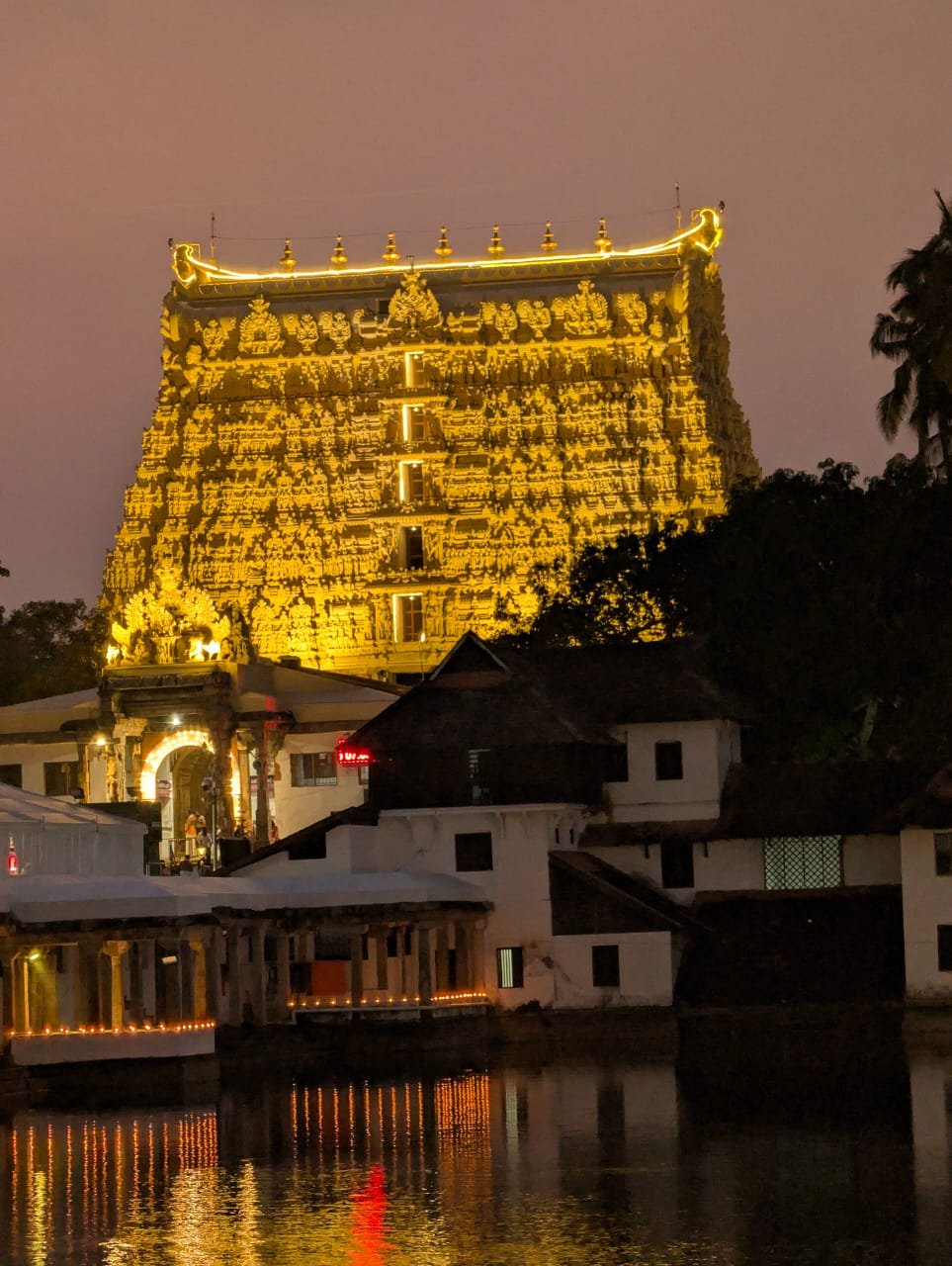

Sri Padmanabhaswamy Temple , Pazhavangadi, Thiruvananthapuram, Kerala 695023
Sri Padmanabhaswamy Temple , Pazhavangadi, Thiruvananthapuram, Kerala 695023
శ్రీ పద్మనాభస్వామి ఆలయం, పజవంగడి, తిరువనంతపురం, కేరళ 695023
ശ്രീ പത്മനാഭസ്വാമി ക്ഷേത്രം, പഴവങ്ങാടി, തിരുവനന്തപുരം, കേരളം 695023
Maps
Contact
Hightlight
-
 Airport
-
 Bus Facility
-
 Parking
-
 Taxi
Taxi

More Information
- Temple History The origin of the Temple of Sree Padmanabhaswamy is lost in antiquity. It is not possible to determine with any exactitude, from any reliable historical documents or other sources as to when and by whom the original idol of Sree Padmanabhaswamy was consecrated. The Temple has references in Epics and Puranas. Srimad Bhagavatha says that Balarama visited this Temple, bathed in Padmatheertham and made several offerings. Nammalwar, 9th century poet and one among the 12 Vaishnavite saints of the Alvar tradition, has composed ten hymns in praise of Lord Padmanabha. Some well known scholars, writers and historians, like the late Dr. L.A.Ravi Varma of Travancore, have expressed the view that this Temple was established on the first day of Kali Yuga (which is over 5000 years ago). The legends of the Temple are handed down through the centuries. One such legend which finds a place in the old palm leaf records of the Temple, as also in the famous grantha entitled “Ananthasayana Mahatmya”, mentions that it was consecrated by a Tulu Brahmin hermit named Divakara Muni. On the 950th year of Kali Yuga a reinstallation of the idol was done. In the 960th Kali year King Kotha Marthandan built the Abhisravana Mandapam.. The story as narrated in the Ananthasayana Mahatmya goes as follows. Divakara Muni was a great Vishnu Bhaktha. While at ‘Aanarthadesa’, he performed deep tapas. One day Maha Vishnu appeared before the sage as a lovely child. The charming child attracted the attention of the sage. He requested the God-child to stay with him. The child made his stay conditional. Accordingly, the Sanyasi should treat him with respect. On failing to do so, he would vanish at once. This was accepted and the child stayed with him. The hermit gave him great care and tolerated the childish pranks. One day, when the sanyasi was in deep meditation at his prayers, the chills took the ‘salagram’ which the sanyasi was using for worship and put it into his mouth and made such a nuisance of himself that Divakara Mini was greatly angered and could tolerate it no further. He thereupon chastised the child. In accordance with the earlier agreement, immediately the child ran away and disappeared from the spot. While going he said, “If you wish to see me again, you will find me again in Ananthankaadu”. It was only then that Divakara Muni realized who his erstwhile child guest had been. The hermit was stricken with inconsolable grief and for many days followed what, he believed was the route taken by the child foregoing food, rest and sleep in the process. Finally he reached a wooded area near the sea coast, caught a glimpse of the child disappearing into a huge ‘Ilappa’ tree. Immediately the tree fell into the ground and it assumed the form of Sree Maha Vishnu. The divine form had its head at ‘Thiruvallam’(a place about 3 miles from East Fort at where the Temple of Sree Padmanabha Swamy is located) and its feet at ‘Trippapur’ (5 miles away towards the north). Overawed by the majesty and the size of the divine form, which manifested before him, the Sanyasi prayed to the Lord to condense Himself in size so that he could behold Him. There upon the image of the Lord shrank to a size, three times the length of the Sanyasy’s Yoga Dand. His prayers had been granted. He immediately offered a raw mango in a coconut shell(still this offering continues). The Lord ordained that, poojas to Him should be conducted by Tulu Brahmins. To this day half the number of poojaris(priests) in this Temple represent Tulu region. Another generally accepted version about the origin of the Temple relates it to the famous Namboothiri sanyasi Vilvamangalathu Swamiyar, whose name is linked with the histories of several temples in Southern India. This Swamiyar was also a Vishnu bhaktha. The legend is almost identical with that of Divakara Muni referred above. It is said that, when Sree Maha Vishnu presented himself in the Ananthasayana rupa (in the form of reclining on Anantha) before the sage at Ananthankaadu, the latter had nothing worthwhile to offer Him. From a mango tree standing nearby he plucked a few unripe mangoes and placed them in a coconut shell lying there and in all humility offered it as ‘nivedyam’ to the Lord. Even today salted mango forms a major offering. The original coconut shell has been encased in gold. It has also been the practice in the Temple for the past several centuries that the morning ‘pushpanjali’ is to be performed by a Namboothiri Brahmin sanyasi (designated Pushpanjaly Swamiyar) specially commissioned for this purpose. These traditional customs coupled with the fact that the Pushpanjali Swamiyar holds a position of importance in the ‘Ettara Yogam’ (a committee which, at one time in the distant past, was the governing body of the Temple but has, over the years, become a ceremonial and advisory panel) lend substance and some measures of credence to the theory that this Temple was founded by Vilvamangalathu Swamiyar. On the other hand the legend of the Divakara Muni can be substantiated by the presence of a large number of Tulu Brahmins. Besides being represented in the ‘Yogam’, the Namboothiri Brahmins also have a position of eminence in the rituals and ceremonies of theTtemple . The Tantries(high priests) have always been from the Tharananalloor family belonging to this community. It is also believed that the small Sree Krishna Swamy Temple, located near the Western Swamiyar Madham (residence of one of the two Pushpanjali Swamiyars of the Temple) has been built over the Samadhi of Vilvamangalathu Swamiyar. Some historians and researchers hold the view that the Thiruvambadi shrine of Sree Krishna Swamy is older than the shrine of Sree Padmanabhaswamy. According to legend the Sree Narasimhaswamy and Sree Sastha shrines were established after the installation of the idol of Lord Sree Padmanabhaswamy. There is mention in the ‘Bhagavatha Purana’ (canto 10, chapter 79) that Sree Balarama visited “Syanandoorapuram” or “Ananthasayam” (Thiruvananthapuram) in the course of His pilgrimage. Similarly in the ‘Brahmanda Purana’ also there is a reference to “Syanandoorapura”. These references show that this Temple is of great antiquity and has been held in veneration over the centuries as an important seat of Sree Maha Vishnu. The compositions of Nammalvar, the great Vaishnavite saint, in praise of Sree Maha Vishnu of this city, prove beyond doubt that this Temple existed in the ninth century of this era. In the year 1050A.D.(225ME), the Temple was reconstructed and the management re-organized by the then ruler. The next important recorded events relate to the period between 1335 A.D. and 1384 A.D. when Venad was ruled by a powerful and wise king named Veera Marthanda Varma. He gradually established his authority completely over the management and administration of the Temple. There are records to indicate that in the year 1375 A.D. the Alpasi Utsavam (ten days festival held in October-November) was conducted in the Temple. Some of the important events relating to the Temple which took place after the demise of this ruler until 1729 A.D. are given below. Between 1459 A.D. and 1460 A.D. the idol of Sree Padmanabhaswamy was removed to a ‘Balalaya’ for the purpose of re-construction of the roof of the sanctum sanctorum. In 1461 A.D. the idol was re installed and an Ottakkal Mandapam (Single granite stone slab abutting the sanctum sanctorum) was put up. In 1566 A.D. the foundation was laid for the Gopuram (pagoda) over the main eastern entrance. In 1686 A.D. the Temple was almost fully destroyed in a major fire accident. Work on the re- construction of the Temple was started only in 1724. In 1728 A.D. propitiatory ceremonies, connected with the serious fire of 1686, were conducted. It was in the year 1729 that the great ruler Marthanda Varma became the king of Travancore. He took the steps to renovate the Temple. In 1730 the idol was again moved to ‘Balalaya’ prior to the renovation and reconstruction of the sanctum sanctorum. It took two years for completion. The old wooden idol was replaced by the one that we see today. Made of highly complex amalgam known as Katusarkarayogam, it contains 12008 Salagrams within it. Most of what is seen today within the walls of the temple were constructed. It is recorded that 4000 sculptors, 6000 labourers and 100 elephants worked for a period of 6 months to finish the construction of the sreebalippura (the oblong corridor). This magnificent rectangular corridor built of solid stones protects the Deities during seeveli on rainy days. The gopuram for which the foundation had been laid in 1566, was built during this period. Similarly the flag-staff in front of the main shrine was also erected at this time. Teak wood of required size was brought from the forest for this purpose and transported to the Temple in such a way that no part of the wood touched the ground. The pole was then covered completely with gold sheets. The renovation of the Temple tank, the Padmatheertham, including the flight steps and its completion in the form we see it today was also undertaken during this great ruler’s time. Sri Anantha Padmanabha Swamy Temple is one of the oldest and most sacred Vishnu temples in India, with its origins deeply rooted in ancient Hindu tradition and legend. The temple is dedicated to Lord Vishnu in the Anantha Shayana posture, reclining on the serpent Adi Shesha, symbolizing cosmic balance, preservation, and eternity. The very name of the city Thiruvananthapuram means “The City of Lord Ananta”, reflecting the temple’s central role in the spiritual identity of the region. According to legend, the temple’s origin is associated with the sage Divakara Muni, who performed intense penance seeking the darshan of Lord Vishnu. Pleased with his devotion, the Lord appeared as a small child and later manifested in the majestic Anantha Shayana form on a forested hill near the present temple site. This divine manifestation is believed to have sanctified the entire area, leading to the establishment of the temple. The temple finds mention in ancient Tamil devotional literature, particularly in the hymns of the Alvars, the Vaishnava saint-poets. Nammalvar, one of the greatest Alvars, praised the deity of this temple, confirming its existence and importance as early as the 8th century CE. The temple is also counted among the 108 Divya Desams, the holiest Vishnu temples revered in Sri Vaishnava tradition. Over the centuries, the temple evolved under the patronage of various rulers, but its most significant development occurred under the Travancore royal family. In 1750 CE, Maharaja Anizham Thirunal Marthanda Varma performed the historic act of Thrippadidanam, formally dedicating his kingdom to Lord Padmanabha. From that moment onward, the rulers of Travancore governed not as kings, but as “Padmanabha Dasa” (servants of the Lord). This act firmly established the temple as both a spiritual and administrative center of the kingdom. The present structure of the temple reflects a blend of Kerala and Dravidian architectural styles, with a towering gopuram built in the 16th century. The temple strictly follows ancient Tantric and Vaikhanasa Agama traditions, preserving rituals and customs that have remained largely unchanged for centuries. In modern times, the temple gained worldwide attention due to the discovery of ancient vaults containing immense treasures, believed to be offerings made by kings and devotees over many generations. While these discoveries highlighted the temple’s historical wealth, devotees continue to regard Sri Anantha Padmanabha Swamy Temple primarily as a living center of devotion, discipline, and dharma, where tradition and spirituality remain paramount. Even today, the temple stands as a timeless symbol of faith, continuity, and divine protection, attracting devotees from across India and the world who seek the blessings of Lord Padmanabha. శ్రీ పద్మనాభస్వామి ఆలయ మూలాలు ప్రాచీన కాలంలో కలిసిపోయాయి. శ్రీ పద్మనాభస్వామి వారి మూల విగ్రహాన్ని ఎప్పుడు, ఎవరు ప్రతిష్ఠించారనే విషయాన్ని ఏ విశ్వసనీయ చారిత్రక పత్రాలు లేదా ఇతర ఆధారాల నుండి కచ్చితంగా నిర్ధారించడం సాధ్యం కాదు. ఈ ఆలయం గురించి ఇతిహాసాలు మరియు పురాణాలలో ప్రస్తావన ఉంది. శ్రీమద్ భాగవతం ప్రకారం, బలరాముడు ఈ ఆలయాన్ని సందర్శించి, పద్మతీర్థంలో స్నానం చేసి, అనేక కానుకలు సమర్పించాడు. 9వ శతాబ్దపు కవి మరియు ఆళ్వార్ సంప్రదాయానికి చెందిన 12 మంది వైష్ణవ సాధువులలో ఒకరైన నమ్మాళ్వార్, పద్మనాభ స్వామిని స్తుతిస్తూ పది స్తోత్రాలను రచించారు. ట్రావెన్కోర్కు చెందిన దివంగత డాక్టర్ ఎల్.ఎ. రవి వర్మ వంటి కొంతమంది ప్రసిద్ధ పండితులు, రచయితలు మరియు చరిత్రకారులు, ఈ ఆలయం కలియుగం మొదటి రోజున (అంటే 5000 సంవత్సరాల క్రితం) స్థాపించబడిందని అభిప్రాయపడ్డారు. ఆలయానికి సంబంధించిన పురాణ కథలు శతాబ్దాలుగా వస్తున్నాయి. ఆలయానికి సంబంధించిన పాత తాళపత్ర గ్రంథాలలో, అలాగే "అనంతశయన మహత్యం" అనే ప్రసిద్ధ గ్రంథంలో కూడా ప్రస్తావించబడిన అటువంటి ఒక పురాణ కథ ప్రకారం, దివాకర ముని అనే తులు బ్రాహ్మణ సన్యాసి ఈ ఆలయాన్ని ప్రతిష్ఠించాడని తెలుస్తోంది. కలియుగం 950వ సంవత్సరంలో విగ్రహ పునఃప్రతిష్ఠ జరిగింది. కలియుగం 960వ సంవత్సరంలో కోత మార్తాండ రాజు అభిశ్రవణ మండపాన్ని నిర్మించాడు. అనంతశయన మహత్యంలో వివరించిన కథ ఈ క్రింది విధంగా ఉంది. దివాకర ముని గొప్ప విష్ణు భక్తుడు. 'ఆనర్థదేశం'లో ఉన్నప్పుడు, అతను తీవ్రమైన తపస్సు చేశాడు. ఒక రోజు మహావిష్ణువు ఒక అందమైన బాలుడి రూపంలో ఆ ముని ముందు ప్రత్యక్షమయ్యాడు. ఆ మనోహరమైన బాలుడు ముని దృష్టిని ఆకర్షించాడు. ఆ దైవ బాలుడిని తనతో ఉండమని ముని కోరాడు. ఆ బాలుడు తన నివాసానికి ఒక షరతు పెట్టాడు. దాని ప్రకారం, ఆ సన్యాసి తనను గౌరవంగా చూడాలి. అలా చేయడంలో విఫలమైతే, తాను వెంటనే అదృశ్యమవుతానని చెప్పాడు. దీనికి అంగీకరించి, ఆ బాలుడు అతనితో ఉన్నాడు. ఆ సన్యాసి అతన్ని చాలా జాగ్రత్తగా చూసుకున్నాడు మరియు అతని బాల్యపు అల్లర్లను సహించాడు. ఒక రోజు, సన్యాసి తన ప్రార్థనలలో లోతైన ధ్యానంలో ఉన్నప్పుడు, ఆ బాలుడు సన్యాసి పూజ కోసం ఉపయోగిస్తున్న 'సాలగ్రామాన్ని' తీసుకుని తన నోటిలో పెట్టుకుని, చాలా అల్లరి చేశాడు. దాంతో దివాకర మునికి తీవ్రమైన కోపం వచ్చి, దానిని మరింతగా సహించలేకపోయాడు. అప్పుడు అతను ఆ బాలుడిని మందలించాడు. మునుపటి ఒప్పందం ప్రకారం, వెంటనే ఆ బాలుడు పారిపోయి ఆ ప్రదేశం నుండి అదృశ్యమయ్యాడు. వెళ్తూ వెళ్తూ అతను, “నన్ను మళ్ళీ చూడాలనుకుంటే, మీరు నన్ను అనంతంకాడులో మళ్ళీ కనుగొంటారు” అని చెప్పాడు. అప్పుడే దివాకర మునికి తన పూర్వపు బాల అతిథి ఎవరో తెలిసి వచ్చింది. ఆ ముని తీరని దుఃఖంతో కుంగిపోయి, చాలా రోజుల పాటు ఆహారం, విశ్రాంతి, నిద్రను విడిచిపెట్టి, ఆ బాలుడు వెళ్ళాడని తాను నమ్మిన మార్గంలో ప్రయాణించాడు. చివరకు అతను సముద్ర తీరానికి సమీపంలో ఉన్న ఒక అటవీ ప్రాంతానికి చేరుకుని, ఒక పెద్ద ‘ఇలప్ప’ చెట్టులోకి అదృశ్యమవుతున్న బాలుడిని చూశాడు. వెంటనే ఆ చెట్టు నేలకూలి, శ్రీ మహావిష్ణువు రూపం ధరించింది. ఆ దివ్య రూపం యొక్క తల ‘తిరువల్లం’లో (శ్రీ పద్మనాభ స్వామి ఆలయం ఉన్న ఈస్ట్ ఫోర్ట్ నుండి సుమారు 3 మైళ్ల దూరంలో ఉన్న ప్రదేశం) మరియు పాదాలు ‘త్రిప్పాపూర్’లో (ఉత్తరం వైపు 5 మైళ్ల దూరంలో) ఉన్నాయి. తన ముందు ప్రత్యక్షమైన ఆ దివ్య రూపం యొక్క వైభవాన్ని, పరిమాణాన్ని చూసి ఆశ్చర్యపోయిన ఆ సన్యాసి, తాను ఆ రూపాన్ని చూడగలిగేలా దాని పరిమాణాన్ని తగ్గించమని భగవంతుడిని ప్రార్థించాడు. అప్పుడు భగవంతుని విగ్రహం ఆ సన్యాసి యోగదండం పొడవుకు మూడు రెట్లు పరిమాణంలోకి కుంచించుకుపోయింది. అతని ప్రార్థనలు ఫలించాయి. అతను వెంటనే ఒక కొబ్బరి చిప్పలో పచ్చి మామిడికాయను నైవేద్యంగా సమర్పించాడు (ఈ సమర్పణ ఇప్పటికీ కొనసాగుతోంది). తన పూజలు తులు బ్రాహ్మణులచే జరపబడాలని భగవంతుడు ఆజ్ఞాపించాడు. నేటికీ ఈ ఆలయంలోని పూజారులలో సగం మంది తులు ప్రాంతానికి చెందినవారే. ఆలయం యొక్క మూలం గురించి సాధారణంగా అంగీకరించబడిన మరో కథ, దీనిని దక్షిణ భారతదేశంలోని అనేక దేవాలయాల చరిత్రలతో ముడిపడి ఉన్న ప్రసిద్ధ నంబూద్రి సన్యాసి విల్వమంగళత్తు స్వామియార్తో ముడిపెడుతుంది. ఈ స్వామియార్ కూడా విష్ణు భక్తుడు. ఈ కథ పైన పేర్కొన్న దివాకర ముని కథతో దాదాపు సమానంగా ఉంటుంది. అనంతంకాడులో శ్రీ మహావిష్ణువు అనంతశయన రూపంలో ఆ ముని ముందు ప్రత్యక్షమైనప్పుడు, అతనికి భగవంతుడికి సమర్పించడానికి తగినది ఏమీ లేదని చెబుతారు. సమీపంలో ఉన్న ఒక మామిడి చెట్టు నుండి కొన్ని పచ్చి మామిడికాయలను కోసి, అక్కడ పడి ఉన్న కొబ్బరి చిప్పలో పెట్టి, అత్యంత వినయంతో దానిని భగవంతుడికి ‘నైవేద్యం’గా సమర్పించాడు. ఈనాటికీ ఉప్పు మామిడికాయ ఒక ముఖ్యమైన నైవేద్యంగా ఉంది. అసలైన కొబ్బరి చిప్పను బంగారంతో తాపడం చేశారు. గత అనేక శతాబ్దాలుగా ఈ ఆలయంలో ఉదయం పూట చేసే 'పుష్పాంజలి'ని ఈ ప్రయోజనం కోసం ప్రత్యేకంగా నియమించబడిన ఒక నంబూద్రి బ్రాహ్మణ సన్యాసి (నియమిత పుష్పాంజలి స్వామియార్) చేత చేయించడం కూడా ఆనవాయితీగా వస్తోంది. ఈ సాంప్రదాయ ఆచారాలు, అలాగే పుష్పాంజలి స్వామియార్ 'ఎట్టర యోగం'లో (చాలా కాలం క్రితం ఆలయ పరిపాలనా సంస్థగా ఉండి, కాలక్రమేణా ఒక ఉత్సవ మరియు సలహా సంఘంగా మారిన ఒక కమిటీ) ఒక ముఖ్యమైన స్థానాన్ని కలిగి ఉండటం వంటి వాస్తవాలు, ఈ ఆలయాన్ని విల్వమంగళత్తు స్వామియార్ స్థాపించారనే సిద్ధాంతానికి బలం మరియు కొంత విశ్వసనీయతను చేకూరుస్తున్నాయి. మరోవైపు, ఒక పురాణ కథ ప్రకారం... దివాకర ముని ఉనికిని పెద్ద సంఖ్యలో ఉన్న తులు బ్రాహ్మణుల ఉనికి ద్వారా నిరూపించవచ్చు. 'యోగం'లో ప్రాతినిధ్యం వహించడంతో పాటు, నంబూద్రి బ్రాహ్మణులకు ఆలయ ఆచారాలు మరియు వేడుకలలో కూడా ఉన్నత స్థానం ఉంది. తంత్రులు (ప్రధాన పూజారులు) ఎల్లప్పుడూ ఈ సమాజానికి చెందిన తరణనల్లూర్ కుటుంబం వారే. పశ్చిమ స్వామియార్ మఠం (ఆలయానికి చెందిన ఇద్దరు పుష్పాంజలి స్వామియార్లలో ఒకరి నివాసం) సమీపంలో ఉన్న చిన్న శ్రీ కృష్ణ స్వామి ఆలయం, విల్వమంగళత్తు స్వామియార్ సమాధిపై నిర్మించబడిందని కూడా నమ్ముతారు. కొంతమంది చరిత్రకారులు మరియు పరిశోధకులు శ్రీ పద్మనాభస్వామి ఆలయం కంటే శ్రీ కృష్ణస్వామి యొక్క తిరువంబడి మందిరం పురాతనమైనదని అభిప్రాయపడ్డారు. పురాణాల ప్రకారం, శ్రీ పద్మనాభస్వామి విగ్రహ ప్రతిష్ఠాపన తర్వాత శ్రీ నరసింహస్వామి మరియు శ్రీ శాస్తా మందిరాలు స్థాపించబడ్డాయి. శ్రీ బలరాముడు తన తీర్థయాత్రలో భాగంగా "శ్యానందూరపురం" లేదా "అనంతశయనం" (తిరువనంతపురం) సందర్శించినట్లు 'భాగవత పురాణం' (దశమ స్కంధం, 79వ అధ్యాయం)లో ప్రస్తావించబడింది. అదేవిధంగా 'బ్రహ్మాండ పురాణం'లో కూడా "శ్యానందూరపురం" గురించి ప్రస్తావన ఉంది. ఈ ప్రస్తావనలు ఈ ఆలయం గొప్ప ప్రాచీనమైనదని మరియు శతాబ్దాలుగా శ్రీ మహావిష్ణువు యొక్క ముఖ్యమైన పీఠంగా పూజించబడుతోందని చూపిస్తున్నాయి. గొప్ప వైష్ణవ సాధువైన నమ్మాళ్వార్ ఈ నగరం యొక్క శ్రీ మహావిష్ణువును కీర్తిస్తూ చేసిన రచనలు, ఈ ఆలయం ఈ శకం తొమ్మిదవ శతాబ్దంలో ఉనికిలో ఉందని నిస్సందేహంగా నిరూపిస్తున్నాయి. క్రీ.శ. 1050వ సంవత్సరంలో (225 ఎం.ఇ.) అప్పటి పాలకుడు ఆలయాన్ని పునర్నిర్మించి, దాని నిర్వహణను పునర్వ్యవస్థీకరించాడు. తదుపరి ముఖ్యమైన నమోదు చేయబడిన సంఘటనలు క్రీ.శ. 1335 మరియు 1384 మధ్య కాలానికి సంబంధించినవి, ఆ సమయంలో వేనాడును వీర మార్తాండ వర్మ అనే శక్తివంతమైన మరియు వివేకవంతుడైన రాజు పరిపాలిస్తున్నాడు. అతను క్రమంగా ఆలయ నిర్వహణ మరియు పరిపాలనపై తన అధికారాన్ని పూర్తిగా స్థాపించాడు. క్రీ.శ. 1375వ సంవత్సరంలో ఆలయంలో అల్పాసి ఉత్సవం (అక్టోబర్-నవంబర్లో జరిగే పది రోజుల పండుగ) నిర్వహించబడిందని సూచించే రికార్డులు ఉన్నాయి. ఈ పాలకుడి మరణానంతరం క్రీ.శ. 1729 వరకు జరిగిన ఆలయానికి సంబంధించిన కొన్ని ముఖ్యమైన సంఘటనలు క్రింద ఇవ్వబడ్డాయి. క్రీ.శ. 1459 మరియు 1460 మధ్య కాలంలో గర్భగుడి పైకప్పు పునర్నిర్మాణం కోసం శ్రీ పద్మనాభస్వామి విగ్రహాన్ని 'బాలాలయం'లోకి తరలించారు. క్రీ.శ. 1461లో విగ్రహాన్ని తిరిగి ప్రతిష్టించి, గర్భగుడికి ఆనుకుని ఒక ఒట్టక్కల్ మండపం (ఒకే గ్రానైట్ రాతి పలక) నిర్మించారు. క్రీ.శ. 1566లో ప్రధాన తూర్పు ప్రవేశ ద్వారంపై గోపురం (పగోడా) కోసం పునాది వేశారు. క్రీ.శ. 1686లో జరిగిన ఒక పెద్ద అగ్నిప్రమాదంలో ఆలయం దాదాపు పూర్తిగా ధ్వంసమైంది. దేవాలయ పునర్నిర్మాణ పనులు 1724వ సంవత్సరంలో మాత్రమే ప్రారంభమయ్యాయి. క్రీ.శ. 1728లో, 1686లో జరిగిన తీవ్రమైన అగ్నిప్రమాదానికి సంబంధించిన శాంతి కార్యాలు నిర్వహించబడ్డాయి. 1729వ సంవత్సరంలోనే గొప్ప పాలకుడైన మార్తాండ వర్మ ట్రావెన్కోర్ రాజుగా సింహాసనాన్ని అధిష్టించారు. ఆయన దేవాలయాన్ని పునరుద్ధరించడానికి చర్యలు తీసుకున్నారు. 1730లో, గర్భగుడి పునరుద్ధరణ మరియు పునర్నిర్మాణానికి ముందు విగ్రహాన్ని మళ్ళీ 'బాలాలయం'లోకి తరలించారు. దీని పూర్తికి రెండు సంవత్సరాలు పట్టింది. పాత చెక్క విగ్రహం స్థానంలో మనం ఈనాడు చూస్తున్న విగ్రహాన్ని ప్రతిష్టించారు. అత్యంత సంక్లిష్టమైన 'కటుశర్కరయోగం' అనే మిశ్రమంతో తయారు చేయబడిన ఈ విగ్రహంలో 12008 శాలగ్రామాలు ఉన్నాయి. ఈనాడు దేవాలయ ప్రాంగణంలో కనిపించే వాటిలో చాలా వరకు ఈ కాలంలోనే నిర్మించబడ్డాయి. శ్రీబలిప్పుర (దీర్ఘచతురస్రాకారపు నడవ) నిర్మాణాన్ని పూర్తి చేయడానికి 4000 మంది శిల్పులు, 6000 మంది కూలీలు మరియు 100 ఏనుగులు 6 నెలల పాటు పనిచేశాయని నమోదు చేయబడింది. ఘనమైన రాళ్లతో నిర్మించబడిన ఈ అద్భుతమైన దీర్ఘచతురస్రాకారపు నడవ వర్షాకాలంలో సీవేళి సమయంలో దేవతామూర్తులను రక్షిస్తుంది. 1566లో పునాది వేయబడిన గోపురం కూడా ఈ కాలంలోనే నిర్మించబడింది. అదేవిధంగా, ప్రధాన మందిరం ముందున్న ధ్వజస్తంభం కూడా ఈ సమయంలోనే ప్రతిష్టించబడింది. ఈ ప్రయోజనం కోసం అడవి నుండి అవసరమైన పరిమాణంలో టేకు కలపను తీసుకువచ్చి, ఆ కలపలోని ఏ భాగం కూడా నేలను తాకకుండా దేవాలయానికి రవాణా చేశారు. ఆ తర్వాత ఆ స్తంభాన్ని పూర్తిగా బంగారు రేకులతో కప్పారు. ఈ గొప్ప పాలకుడి కాలంలోనే దేవాలయ పుష్కరిణి అయిన పద్మతీర్థం మెట్ల నిర్మాణంతో సహా పునరుద్ధరణ పనులు చేపట్టి, ఈనాడు మనం చూస్తున్న రూపంలో పూర్తి చేశారు. శ్రీ అనంత పద్మనాభ స్వామి దేవాలయం భారతదేశంలోని అత్యంత పురాతన మరియు పవిత్రమైన విష్ణు దేవాలయాలలో ఒకటి, దీని మూలాలు ప్రాచీన హిందూ సంప్రదాయం మరియు పురాణాలలో లోతుగా పాతుకుపోయాయి. ఈ దేవాలయం ఆదిశేషునిపై అనంతశయన భంగిమలో శయనించి ఉన్న విష్ణుమూర్తికి అంకితం చేయబడింది, ఇది విశ్వ సమతుల్యత, పరిరక్షణ మరియు శాశ్వతత్వానికి ప్రతీక. తిరువనంతపురం అనే నగర నామానికే "అనంత ప్రభువు నగరం" అని అర్థం, ఇది ఈ ప్రాంతం యొక్క ఆధ్యాత్మిక గుర్తింపులో దేవాలయానికి ఉన్న కేంద్ర పాత్రను ప్రతిబింబిస్తుంది. పురాణాల ప్రకారం, ఈ ఆలయం యొక్క మూలం దివాకర ముని అనే రుషితో ముడిపడి ఉంది. ఆయన విష్ణుమూర్తి దర్శనం కోసం తీవ్ర తపస్సు చేశాడు. ఆయన భక్తికి మెచ్చిన భగవంతుడు ఒక చిన్న బాలుడి రూపంలో ప్రత్యక్షమై, ఆ తర్వాత ప్రస్తుత ఆలయ స్థలానికి సమీపంలో ఉన్న ఒక అటవీ కొండపై అద్భుతమైన అనంతశయన రూపంలో వెలశాడు. ఈ దైవిక ఆవిర్భావం మొత్తం ప్రాంతాన్ని పవిత్రం చేసిందని, దాని ఫలితంగానే ఆలయం స్థాపించబడిందని నమ్ముతారు. ఈ ఆలయం ప్రాచీన తమిళ భక్తి సాహిత్యంలో, ముఖ్యంగా వైష్ణవ సాధు-కవులైన ఆళ్వార్ల కీర్తనలలో ప్రస్తావించబడింది. గొప్ప ఆళ్వార్లలో ఒకరైన నమ్మాళ్వార్, ఈ ఆలయంలోని దేవతను కీర్తించారు, దీని ద్వారా సా.శ. 8వ శతాబ్దం నాటికే దీని ఉనికిని మరియు ప్రాముఖ్యతను ధృవీకరించారు. ఈ ఆలయం శ్రీ వైష్ణవ సంప్రదాయంలో పూజించబడే 108 దివ్య దేశాలలో ఒకటిగా కూడా పరిగణించబడుతుంది. శతాబ్దాలుగా, ఈ ఆలయం వివిధ పాలకుల పోషణలో అభివృద్ధి చెందింది, కానీ దాని అత్యంత ముఖ్యమైన అభివృద్ధి ట్రావెన్కోర్ రాజకుటుంబం ఆధ్వర్యంలో జరిగింది. సా.శ. 1750లో, మహారాజా అనిజం తిరునాల్ మార్తాండ వర్మ చారిత్రాత్మకమైన త్రిప్పడిదానం అనే కార్యక్రమాన్ని నిర్వహించి, తన రాజ్యాన్ని లాంఛనంగా పద్మనాభ స్వామికి అంకితం చేశాడు. ఆ క్షణం నుండి, ట్రావెన్కోర్ పాలకులు రాజులుగా కాకుండా, "పద్మనాభ దాసులు"గా పరిపాలించారు."మనభ దాస" (భగవంతుని సేవకులు) అనే వ్యక్తి ఈ ఆలయాన్ని రాజ్యం యొక్క ఆధ్యాత్మిక మరియు పరిపాలనా కేంద్రంగా దృఢంగా స్థాపించాడు. ఈ ఆలయం యొక్క ప్రస్తుత నిర్మాణం కేరళ మరియు ద్రావిడ నిర్మాణ శైలుల మిశ్రమాన్ని ప్రతిబింబిస్తుంది, 16వ శతాబ్దంలో నిర్మించబడిన ఒక ఎత్తైన గోపురంతో. ఈ ఆలయం పురాతన తాంత్రిక మరియు వైఖానస ఆగమ సంప్రదాయాలను ఖచ్చితంగా అనుసరిస్తుంది, శతాబ్దాలుగా పెద్దగా మారని ఆచారాలు మరియు ఆచారాలను సంరక్షిస్తుంది. ఆధునిక కాలంలో, రాజులు మరియు భక్తులు అనేక తరాలుగా సమర్పించిన నైవేద్యాలుగా నమ్మే అపారమైన సంపదలను కలిగి ఉన్న పురాతన ఖజానాలను కనుగొన్న కారణంగా ఈ ఆలయం ప్రపంచవ్యాప్తంగా దృష్టిని ఆకర్షించింది. ఈ ఆవిష్కరణలు ఆలయ చారిత్రక సంపదను హైలైట్ చేసినప్పటికీ, భక్తులు శ్రీ అనంత పద్మనాభ స్వామి ఆలయాన్ని ప్రధానంగా భక్తి, క్రమశిక్షణ మరియు ధర్మం యొక్క జీవన కేంద్రంగా భావిస్తారు, ఇక్కడ సంప్రదాయం మరియు ఆధ్యాత్మికత అత్యంత ముఖ్యమైనవి. నేటికీ, ఈ ఆలయం విశ్వాసం, కొనసాగింపు మరియు దైవిక రక్షణకు కాలాతీత చిహ్నంగా నిలుస్తుంది, భారతదేశం మరియు ప్రపంచం అంతటా భక్తులను ఆకర్షిస్తుంది, వారు పద్మనాభ భగవంతుని ఆశీర్వాదాలను కోరుకుంటారు. ശ്രീപത്മനാഭസ്വാമി ക്ഷേത്രത്തിന്റെ ഉത്ഭവം പുരാതന കാലത്ത് നഷ്ടപ്പെട്ടു. ശ്രീപത്മനാഭസ്വാമിയുടെ യഥാർത്ഥ വിഗ്രഹം എപ്പോൾ, ആരാണ് പ്രതിഷ്ഠിച്ചത് എന്നതിനെക്കുറിച്ച് വിശ്വസനീയമായ ചരിത്ര രേഖകളിൽ നിന്നോ മറ്റ് സ്രോതസ്സുകളിൽ നിന്നോ കൃത്യമായ വിവരങ്ങൾ നൽകാൻ കഴിയില്ല. ഇതിഹാസങ്ങളിലും പുരാണങ്ങളിലും ക്ഷേത്രത്തെക്കുറിച്ച് പരാമർശങ്ങളുണ്ട്. ബലരാമൻ ഈ ക്ഷേത്രം സന്ദർശിച്ചുവെന്നും പത്മതീർത്ഥത്തിൽ കുളിച്ചു നിരവധി വഴിപാടുകൾ നടത്തിയെന്നും ശ്രീമദ് ഭാഗവതം പറയുന്നു. 9-ാം നൂറ്റാണ്ടിലെ കവിയും ആൾവാർ പാരമ്പര്യത്തിലെ 12 വൈഷ്ണവ സന്യാസിമാരിൽ ഒരാളുമായ നമ്മള്വാർ, പത്മനാഭനെ സ്തുതിച്ചുകൊണ്ട് പത്ത് സ്തുതികൾ രചിച്ചിട്ടുണ്ട്. തിരുവിതാംകൂറിലെ പരേതനായ ഡോ. എൽ.എ.രവിവർമ്മയെപ്പോലുള്ള ചില പ്രശസ്ത പണ്ഡിതന്മാരും എഴുത്തുകാരും ചരിത്രകാരന്മാരും കലിയുഗത്തിന്റെ ഒന്നാം ദിവസമാണ് (അതായത് 5000 വർഷങ്ങൾക്ക് മുമ്പ്) ഈ ക്ഷേത്രം സ്ഥാപിക്കപ്പെട്ടതെന്ന് അഭിപ്രായപ്പെട്ടിട്ടുണ്ട്. ക്ഷേത്രത്തെക്കുറിച്ചുള്ള ഐതിഹ്യങ്ങൾ നൂറ്റാണ്ടുകളായി കൈമാറ്റം ചെയ്യപ്പെടുന്നു. ക്ഷേത്രത്തിന്റെ പഴയ താളിയോല രേഖകളിലും "അനന്തശായന മാഹാത്മ്യ" ത്തിലും ഇടം കണ്ടെത്തുന്ന അത്തരമൊരു ഐതിഹ്യം, ദിവാകര മുനി എന്ന തുളു ബ്രാഹ്മണ സന്യാസിയാണ് ഇത് പ്രതിഷ്ഠിച്ചതെന്ന് പരാമർശിക്കുന്നു. കലിയുഗത്തിന്റെ 950-ാം വർഷത്തിൽ വിഗ്രഹം പുനഃസ്ഥാപിച്ചു. 960-ാം കലി വർഷത്തിൽ രാജാവായ കോത മാർത്താണ്ഡൻ അഭിശ്രവണ മണ്ഡപം നിർമ്മിച്ചു.. അനന്തശായന മാഹാത്മ്യത്തിൽ വിവരിച്ചിരിക്കുന്ന കഥ ഇപ്രകാരമാണ്. ദിവാകര മുനി ഒരു മഹാനായ വിഷ്ണു ഭക്തനായിരുന്നു. 'ആനർത്തദേശ'ത്തിൽ വെച്ച് അദ്ദേഹം ആഴമായ തപസ്സ് ചെയ്തു. ഒരു ദിവസം മഹാവിഷ്ണു മുനിയുടെ മുന്നിൽ ഒരു സുന്ദരനായ കുട്ടിയായി പ്രത്യക്ഷപ്പെട്ടു. ആ സുന്ദരനായ കുട്ടി മുനിയുടെ ശ്രദ്ധ ആകർഷിച്ചു. തന്നോടൊപ്പം താമസിക്കാൻ അദ്ദേഹം ദൈവ-കുട്ടിയോട് അഭ്യർത്ഥിച്ചു. കുട്ടി തന്റെ താമസം വ്യവസ്ഥ ചെയ്തു. അതനുസരിച്ച്, സന്യാസി അവനോട് ബഹുമാനത്തോടെ പെരുമാറണം. അങ്ങനെ ചെയ്യാത്തപ്പോൾ, അവൻ ഉടനെ അപ്രത്യക്ഷനാകും. ഇത് അംഗീകരിക്കപ്പെടുകയും കുട്ടി അവനോടൊപ്പം താമസിക്കുകയും ചെയ്തു. ആ സന്യാസി അദ്ദേഹത്തിന് വളരെയധികം പരിചരണം നൽകുകയും ബാലിശമായ തമാശകൾ സഹിക്കുകയും ചെയ്തു. ഒരു ദിവസം, സന്യാസി പ്രാർത്ഥനയ്ക്കായി ആഴത്തിലുള്ള ധ്യാനത്തിലായിരുന്നപ്പോൾ, ആ വിറയൽ സന്യാസി പൂജയ്ക്കായി ഉപയോഗിച്ചിരുന്ന 'സാളഗ്രാമം' എടുത്ത് വായിൽ വച്ചു, അത് സ്വയം ശല്യപ്പെടുത്തി. ദിവാകരമിനിക്ക് അത്യധികം ദേഷ്യവും അത് സഹിക്കാൻ കഴിയുമായിരുന്നില്ല. തുടർന്ന് അദ്ദേഹം കുട്ടിയെ ശാസിച്ചു. മുമ്പത്തെ കരാറനുസരിച്ച്, കുട്ടി ഉടൻ തന്നെ ഓടിപ്പോയി അവിടെ നിന്ന് അപ്രത്യക്ഷനായി. പോകുമ്പോൾ അദ്ദേഹം പറഞ്ഞു, "നിനക്ക് എന്നെ വീണ്ടും കാണണമെങ്കിൽ, അനന്തൻകാട്ടിൽ എന്നെ വീണ്ടും കാണാം". അപ്പോഴാണ് ദിവാകര മുനി തന്റെ മുൻ ബാല അതിഥി ആരാണെന്ന് തിരിച്ചറിഞ്ഞത്. സന്യാസി അസഹനീയമായ ദുഃഖത്താൽ വലയം ചെയ്യപ്പെട്ടു, ദിവസങ്ങളോളം കുട്ടി ഭക്ഷണം, വിശ്രമം, ഉറക്കം എന്നിവ ഉപേക്ഷിച്ച് സഞ്ചരിച്ച വഴിയിലൂടെ സഞ്ചരിച്ചു. ഒടുവിൽ അദ്ദേഹം കടൽത്തീരത്തിനടുത്തുള്ള ഒരു വനപ്രദേശത്ത് എത്തി, ഒരു വലിയ 'ഇലപ്പ' മരത്തിൽ കുട്ടി അപ്രത്യക്ഷനാകുന്നത് കണ്ടു. ഉടനെ ആ മരം നിലത്തുവീണു, അത് ശ്രീ മഹാവിഷ്ണുവിന്റെ രൂപം സ്വീകരിച്ചു. ആ ദിവ്യരൂപത്തിന്റെ തല 'തിരുവല്ലം' (ശ്രീ പത്മനാഭ സ്വാമി ക്ഷേത്രം സ്ഥിതി ചെയ്യുന്ന കിഴക്കേ കോട്ടയിൽ നിന്ന് ഏകദേശം 3 മൈൽ അകലെയുള്ള സ്ഥലം) യിലും അതിന്റെ പാദങ്ങൾ 'തൃപ്പപ്പൂർ' (വടക്ക് 5 മൈൽ അകലെ) യിലുമാണ് സ്ഥിതി ചെയ്യുന്നത്. തന്റെ മുന്നിൽ പ്രത്യക്ഷപ്പെട്ട ദിവ്യരൂപത്തിന്റെ ഗാംഭീര്യവും വലുപ്പവും കണ്ട് അത്ഭുതപ്പെട്ട സന്യാസി, തന്നെ കാണാൻ കഴിയുന്ന തരത്തിൽ തന്നെത്തന്നെ വലിപ്പത്തിൽ ചുരുക്കാൻ ഭഗവാനോട് പ്രാർത്ഥിച്ചു. അവിടെ ഭഗവാന്റെ പ്രതിച്ഛായ സന്യാസിയുടെ യോഗദണ്ഡത്തിന്റെ മൂന്നിരട്ടി നീളമുള്ള ഒരു വലുപ്പത്തിലേക്ക് ചുരുങ്ങി. അദ്ദേഹത്തിന്റെ പ്രാർത്ഥനകൾ ലഭിച്ചു. അദ്ദേഹം ഉടൻ തന്നെ ഒരു തേങ്ങാ ചിരട്ടയിൽ ഒരു പച്ച മാമ്പഴം അർപ്പിച്ചു (ഇപ്പോഴും ഈ വഴിപാട് തുടരുന്നു). ഭഗവാൻ തനിക്ക് പൂജകൾ നടത്തുന്നത് തുളു ബ്രാഹ്മണരാണെന്ന് കല്പിച്ചു. ഇന്നുവരെ ഈ ക്ഷേത്രത്തിലെ പൂജാരിമാരുടെ (പുരോഹിതന്മാരുടെ) പകുതിയും തുളു മേഖലയെ പ്രതിനിധീകരിക്കുന്നു. ക്ഷേത്രത്തിന്റെ ഉത്ഭവത്തെക്കുറിച്ചുള്ള പൊതുവായി അംഗീകരിക്കപ്പെട്ട മറ്റൊരു പതിപ്പ് പ്രശസ്ത നമ്പൂതിരി സന്യാസി വില്വമംഗലത്തു സ്വാമിയാരുമായി ബന്ധപ്പെട്ടിരിക്കുന്നു, അദ്ദേഹത്തിന്റെ പേര് ദക്ഷിണേന്ത്യയിലെ നിരവധി ക്ഷേത്രങ്ങളുടെ ചരിത്രങ്ങളുമായി ബന്ധപ്പെട്ടിരിക്കുന്നു. ഈ സ്വാമിയാരും ഒരു വിഷ്ണു ഭക്തനായിരുന്നു. മുകളിൽ പരാമർശിച്ച ദിവാകര മുനിയുടെ ഐതിഹ്യം ഏതാണ്ട് സമാനമാണ്. അനന്തൻകാട്ടിൽ ശ്രീ മഹാവിഷ്ണു അനന്തശയന രൂപത്തിൽ (അനന്തനിൽ ചാരിയിരിക്കുന്ന രൂപത്തിൽ) മുനിയുടെ മുമ്പാകെ പ്രത്യക്ഷപ്പെട്ടപ്പോൾ, അനന്തന് അർപ്പിക്കാൻ അർഹമായ ഒന്നും ഉണ്ടായിരുന്നില്ല എന്ന് പറയപ്പെടുന്നു. സമീപത്ത് നിന്നിരുന്ന ഒരു മാമ്പഴത്തിൽ നിന്ന് അദ്ദേഹം കുറച്ച് പഴുക്കാത്ത മാമ്പഴങ്ങൾ പറിച്ചെടുത്ത് അവിടെ കിടക്കുന്ന ഒരു തേങ്ങാ ചിരട്ടയിൽ ഇട്ടു, എല്ലാ വിനയത്തോടെയും അത് ഭഗവാന് 'നിവേദ്യം' ആയി സമർപ്പിച്ചു. ഇന്നും ഉപ്പിട്ട മാമ്പഴം ഒരു പ്രധാന വഴിപാടാണ്. യഥാർത്ഥ തേങ്ങാ ചിരട്ട സ്വർണ്ണത്തിൽ പൊതിഞ്ഞിരിക്കുന്നു. കഴിഞ്ഞ നിരവധി നൂറ്റാണ്ടുകളായി ക്ഷേത്രത്തിൽ പ്രഭാത 'പുഷ്പാഞ്ജലി' ഈ ആവശ്യത്തിനായി പ്രത്യേകം നിയോഗിക്കപ്പെട്ട ഒരു നമ്പൂതിരി ബ്രാഹ്മണ സന്യാസി (പുഷ്പാഞ്ജലി സ്വാമിയാർ എന്ന് നാമകരണം ചെയ്യപ്പെട്ടത്) നടത്തുന്ന രീതിയും നിലവിലുണ്ട്. ഈ പരമ്പരാഗത ആചാരങ്ങളും പുഷ്പാഞ്ജലി സ്വാമിയാർക്ക് 'എട്ടര യോഗ'ത്തിൽ (ഒരു കാലത്ത് ക്ഷേത്രത്തിന്റെ ഭരണസമിതിയായിരുന്നെങ്കിലും കാലക്രമേണ ആചാരപരമായും ഉപദേശക സമിതിയായും മാറിയ ഒരു കമ്മിറ്റി) പ്രാധാന്യമുണ്ട് എന്ന വസ്തുതയും വില്വമംഗലത്തു സ്വാമിയാർ ഈ ക്ഷേത്രം സ്ഥാപിച്ചു എന്ന സിദ്ധാന്തത്തിന് സാരാംശവും ചില വിശ്വാസ്യതകളും നൽകുന്നു. മറുവശത്ത്, ഐതിഹ്യം ദിവാകര മുനിയെ തുളു ബ്രാഹ്മണരുടെ വലിയൊരു സംഖ്യയുടെ സാന്നിധ്യം കൊണ്ട് സ്ഥിരീകരിക്കാൻ കഴിയും. 'യോഗ'ത്തിൽ പ്രതിനിധീകരിക്കപ്പെടുന്നതിനു പുറമേ, ക്ഷേത്രത്തിലെ ആചാരങ്ങളിലും ചടങ്ങുകളിലും നമ്പൂതിരി ബ്രാഹ്മണർക്ക് ഒരു പ്രമുഖ സ്ഥാനമുണ്ട്. തന്ത്രികൾ (പ്രധാന പുരോഹിതന്മാർ) എല്ലായ്പ്പോഴും ഈ സമുദായത്തിൽപ്പെട്ട തരണനല്ലൂർ കുടുംബത്തിൽ നിന്നുള്ളവരാണ്. പടിഞ്ഞാറൻ സ്വാമിയാർ മഠത്തിന് (ക്ഷേത്രത്തിലെ രണ്ട് പുഷ്പാഞ്ജലി സ്വാമിയാർമാരിൽ ഒരാളുടെ വാസസ്ഥലം) സമീപം സ്ഥിതി ചെയ്യുന്ന ചെറിയ ശ്രീകൃഷ്ണ സ്വാമി ക്ഷേത്രം വില്വമംഗലത്തു സ്വാമിയാരുടെ സമാധിക്ക് മുകളിലാണ് നിർമ്മിച്ചിരിക്കുന്നതെന്നും വിശ്വസിക്കപ്പെടുന്നു. ശ്രീകൃഷ്ണ സ്വാമിയുടെ തിരുവമ്പാടി ശ്രീപദ്മനാഭസ്വാമിയുടെ ക്ഷേത്രത്തേക്കാൾ പഴക്കമുണ്ടെന്ന് ചില ചരിത്രകാരന്മാരും ഗവേഷകരും അഭിപ്രായപ്പെടുന്നു. ഐതിഹ്യമനുസരിച്ച് ശ്രീപദ്മനാഭസ്വാമിയുടെ വിഗ്രഹം സ്ഥാപിച്ചതിനു ശേഷമാണ് ശ്രീ നരസിംഹ സ്വാമിയും ശ്രീ ശാസ്താ ക്ഷേത്രങ്ങളും സ്ഥാപിക്കപ്പെട്ടത്. ശ്രീ ബലരാമൻ തന്റെ തീർത്ഥാടന വേളയിൽ "സ്യാനന്ദൂരപുരം" അല്ലെങ്കിൽ "അനന്തസായം" (തിരുവനന്തപുരം) സന്ദർശിച്ചതായി 'ഭാഗവത പുരാണം' (ഖണ്ഡം 10, അദ്ധ്യായം 79) ൽ പരാമർശമുണ്ട്. അതുപോലെ 'ബ്രഹ്മണ്ഡ പുരാണ'ത്തിലും "സ്യാനന്ദൂരപുര" ത്തെക്കുറിച്ചുള്ള പരാമർശമുണ്ട്. ഈ ക്ഷേത്രം വളരെ പുരാതനമാണെന്നും ശ്രീ മഹാവിഷ്ണുവിന്റെ ഒരു പ്രധാന സ്ഥാനത്തെന്ന നിലയിൽ നൂറ്റാണ്ടുകളായി പൂജനീയമായി കരുതപ്പെടുന്നുവെന്നും ഈ പരാമർശങ്ങൾ കാണിക്കുന്നു. ഈ നഗരത്തിലെ ശ്രീ മഹാവിഷ്ണുവിനെ സ്തുതിച്ചുകൊണ്ട് മഹാനായ വൈഷ്ണവ സന്യാസിയായ നമ്മാൾവാറിന്റെ രചനകൾ, ഈ യുഗത്തിന്റെ ഒമ്പതാം നൂറ്റാണ്ടിൽ ഈ ക്ഷേത്രം നിലനിന്നിരുന്നുവെന്ന് സംശയാതീതമായി തെളിയിക്കുന്നു. എ.ഡി. 1050 (225ME) ൽ, അന്നത്തെ ഭരണാധികാരി ക്ഷേത്രം പുനർനിർമ്മിക്കുകയും ഭരണം പുനഃസംഘടിപ്പിക്കുകയും ചെയ്തു. രേഖപ്പെടുത്തിയിട്ടുള്ള അടുത്ത പ്രധാന സംഭവങ്ങൾ എ.ഡി. 1335 നും എ.ഡി. 1384 നും ഇടയിലുള്ള കാലഘട്ടവുമായി ബന്ധപ്പെട്ടതാണ്, അന്ന് വീര മാർത്താണ്ഡ വർമ്മ എന്ന ശക്തനും ജ്ഞാനിയുമായ രാജാവ് വേണാട് ഭരിച്ചിരുന്നു. ക്ഷേത്രത്തിന്റെ നടത്തിപ്പിലും ഭരണത്തിലും അദ്ദേഹം ക്രമേണ പൂർണ്ണമായും തന്റെ അധികാരം സ്ഥാപിച്ചു. എ.ഡി. 1375-ൽ ക്ഷേത്രത്തിൽ അൽപസി ഉത്സവം (ഒക്ടോബർ-നവംബർ മാസങ്ങളിൽ നടന്നിരുന്ന പത്ത് ദിവസത്തെ ഉത്സവം) നടത്തിയിരുന്നതായി രേഖകളുണ്ട്. ഈ ഭരണാധികാരിയുടെ മരണശേഷം എ.ഡി. 1729 വരെ നടന്ന ക്ഷേത്രവുമായി ബന്ധപ്പെട്ട ചില പ്രധാന സംഭവങ്ങൾ താഴെ കൊടുത്തിരിക്കുന്നു. എ.ഡി. 1459-നും 1460-നും ഇടയിൽ ശ്രീപദ്മനാഭസ്വാമിയുടെ വിഗ്രഹം ശ്രീകോവിലിന്റെ മേൽക്കൂര പുനർനിർമ്മിക്കുന്നതിനായി ഒരു 'ബാലാലയ'ത്തിലേക്ക് മാറ്റി. എ.ഡി. 1461-ൽ വിഗ്രഹം പുനഃസ്ഥാപിക്കുകയും ഒറ്റക്കൽ മണ്ഡപം (ശ്രീകോവിലിനോട് ചേർന്നുള്ള ഒറ്റക്കൽ മണ്ഡപം) സ്ഥാപിക്കുകയും ചെയ്തു. എ.ഡി. 1566-ൽ പ്രധാന കിഴക്കൻ കവാടത്തിന് മുകളിലുള്ള ഗോപുരത്തിന് (പഗോഡ) അടിത്തറ പാകി. എ.ഡി. 1686-ൽ ഒരു വലിയ തീപിടുത്തത്തിൽ ക്ഷേത്രം ഏതാണ്ട് പൂർണ്ണമായും നശിച്ചു. ക്ഷേത്രത്തിന്റെ പുനർനിർമ്മാണ പ്രവർത്തനങ്ങൾ 1724-ൽ മാത്രമാണ് ആരംഭിച്ചത്. എ.ഡി. 1728-ൽ 1686-ലെ ഗുരുതരമായ അഗ്നിബാധയുമായി ബന്ധപ്പെട്ട പ്രായശ്ചിത്ത ചടങ്ങുകൾ നടന്നു. 1729-ൽ മഹാനായ ഭരണാധികാരി മാർത്താണ്ഡവർമ്മ തിരുവിതാംകൂർ രാജാവായി. ക്ഷേത്രം പുതുക്കിപ്പണിയാനുള്ള നടപടികൾ അദ്ദേഹം സ്വീകരിച്ചു. 1730-ൽ ശ്രീകോവിലിന്റെ നവീകരണത്തിനും പുനർനിർമ്മാണത്തിനും മുമ്പ് വിഗ്രഹം വീണ്ടും 'ബാലാലയ'ത്തിലേക്ക് മാറ്റി. പൂർത്തീകരിക്കാൻ രണ്ട് വർഷമെടുത്തു. പഴയ തടി വിഗ്രഹം ഇന്ന് നമ്മൾ കാണുന്ന വിഗ്രഹം ഉപയോഗിച്ച് മാറ്റി. കടുശർക്കരയോഗം എന്നറിയപ്പെടുന്ന വളരെ സങ്കീർണ്ണമായ സംയോജനം കൊണ്ട് നിർമ്മിച്ച ഇതിൽ 12008 സാളഗ്രാമങ്ങൾ അടങ്ങിയിരിക്കുന്നു. ക്ഷേത്രത്തിന്റെ ചുവരുകൾക്കുള്ളിൽ ഇന്ന് കാണുന്നവയിൽ ഭൂരിഭാഗവും നിർമ്മിച്ചവയാണ്. ശ്രീബലിപ്പുരയുടെ (ദീർഘചതുരാകൃതിയിലുള്ള ഇടനാഴി) നിർമ്മാണം പൂർത്തിയാക്കാൻ 4000 ശിൽപികളും 6000 തൊഴിലാളികളും 100 ആനകളും 6 മാസക്കാലം പ്രവർത്തിച്ചതായി രേഖപ്പെടുത്തിയിട്ടുണ്ട്. മഴക്കാലത്ത് ശീവേലി സമയത്ത് ദേവതകളെ സംരക്ഷിക്കാൻ ഉറച്ച കല്ലുകൾ കൊണ്ട് നിർമ്മിച്ച ഈ മനോഹരമായ ചതുരാകൃതിയിലുള്ള ഇടനാഴിയാണിത്. 1566-ൽ അടിത്തറ പാകിയ ഗോപുരം ഈ കാലഘട്ടത്തിലാണ് നിർമ്മിച്ചത്. അതുപോലെ പ്രധാന ശ്രീകോവിലിന് മുന്നിലുള്ള കൊടിമരവും ഈ സമയത്താണ് നിർമ്മിച്ചത്. ഇതിനായി ആവശ്യമായ വലിപ്പത്തിലുള്ള തേക്ക് തടി കാട്ടിൽ നിന്ന് കൊണ്ടുവന്ന് തടിയുടെ ഒരു ഭാഗവും നിലത്ത് തൊടാത്ത വിധത്തിൽ ക്ഷേത്രത്തിലേക്ക് കൊണ്ടുപോയി. തുടർന്ന് തൂൺ പൂർണ്ണമായും സ്വർണ്ണ തകിടുകൾ കൊണ്ട് മൂടിയിരുന്നു. ക്ഷേത്ര ടാങ്ക്, പദ്മതീർത്ഥം, പറക്കൽ പടികൾ ഉൾപ്പെടെയുള്ള നവീകരണം, ഇന്ന് നമ്മൾ കാണുന്ന രൂപത്തിൽ അതിന്റെ പൂർത്തീകരണം എന്നിവയും ഈ മഹാനായ ഭരണാധികാരിയുടെ കാലത്താണ് നടത്തിയത്. പുരാതന ഹിന്ദു പാരമ്പര്യത്തിലും ഇതിഹാസത്തിലും ആഴത്തിൽ വേരൂന്നിയ ഇന്ത്യയിലെ ഏറ്റവും പഴക്കമേറിയതും ഏറ്റവും പവിത്രവുമായ വിഷ്ണു ക്ഷേത്രങ്ങളിൽ ഒന്നാണ് ശ്രീ അനന്ത പത്മനാഭ സ്വാമി ക്ഷേത്രം. പ്രപഞ്ച സന്തുലിതാവസ്ഥ, സംരക്ഷണം, നിത്യത എന്നിവയെ പ്രതീകപ്പെടുത്തുന്ന അനന്ത ശയന ഭാവത്തിൽ, ആദിശേഷ എന്ന സർപ്പത്തിൽ ചാരിയിരിക്കുന്ന വിഷ്ണു ഭഗവാന് സമർപ്പിച്ചിരിക്കുന്ന ഈ ക്ഷേത്രം. തിരുവനന്തപുരം എന്ന പേരിന്റെ അർത്ഥം തന്നെ "അനന്തന്റെ നഗരം" എന്നാണ്, ഇത് ഈ പ്രദേശത്തിന്റെ ആത്മീയ സ്വത്വത്തിൽ ക്ഷേത്രത്തിന്റെ കേന്ദ്ര പങ്കിനെ പ്രതിഫലിപ്പിക്കുന്നു. ഐതിഹ്യമനുസരിച്ച്, ക്ഷേത്രത്തിന്റെ ഉത്ഭവം മഹാവിഷ്ണുവിന്റെ ദർശനം തേടി തീവ്രമായ തപസ്സനുഷ്ഠിച്ച ദിവാകര മുനിയുമായി ബന്ധപ്പെട്ടിരിക്കുന്നു. അദ്ദേഹത്തിന്റെ ഭക്തിയിൽ സംപ്രീതനായ ഭഗവാൻ ഒരു കൊച്ചുകുട്ടിയായി പ്രത്യക്ഷപ്പെടുകയും പിന്നീട് ഇന്നത്തെ ക്ഷേത്ര സ്ഥലത്തിനടുത്തുള്ള ഒരു വനപ്രദേശത്തുള്ള ഒരു കുന്നിൽ അനന്തശയനത്തിന്റെ ഗംഭീരമായ രൂപത്തിൽ പ്രത്യക്ഷപ്പെടുകയും ചെയ്തു. ഈ ദിവ്യപ്രകടനം മുഴുവൻ പ്രദേശത്തെയും വിശുദ്ധീകരിച്ചതായി വിശ്വസിക്കപ്പെടുന്നു, ഇത് ക്ഷേത്രത്തിന്റെ സ്ഥാപനത്തിലേക്ക് നയിച്ചു. പുരാതന തമിഴ് ഭക്തിസാഹിത്യത്തിൽ, പ്രത്യേകിച്ച് വൈഷ്ണവ സന്യാസി-കവികളായ ആൾവാർമാരുടെ സ്തുതിഗീതങ്ങളിൽ ക്ഷേത്രത്തെക്കുറിച്ച് പരാമർശമുണ്ട്. എ.ഡി. എട്ടാം നൂറ്റാണ്ടിൽ തന്നെ മഹാനായ ആൾവാർമാരിൽ ഒരാളായ നമ്മാൾവാർ ഈ ക്ഷേത്രത്തിന്റെ ദേവതയെ സ്തുതിച്ചു, അതിന്റെ നിലനിൽപ്പും പ്രാധാന്യവും സ്ഥിരീകരിച്ചു. ശ്രീ വൈഷ്ണവ പാരമ്പര്യത്തിൽ ആരാധിക്കപ്പെടുന്ന ഏറ്റവും പവിത്രമായ വിഷ്ണു ക്ഷേത്രങ്ങളായ 108 ദിവ്യദേശങ്ങളിൽ ഒന്നായി ഈ ക്ഷേത്രം കണക്കാക്കപ്പെടുന്നു. നൂറ്റാണ്ടുകളായി, വിവിധ ഭരണാധികാരികളുടെ രക്ഷാകർതൃത്വത്തിലാണ് ക്ഷേത്രം പരിണമിച്ചത്, എന്നാൽ അതിന്റെ ഏറ്റവും പ്രധാനപ്പെട്ട വികസനം തിരുവിതാംകൂർ രാജകുടുംബത്തിന്റെ കീഴിലാണ് സംഭവിച്ചത്. 1750-ൽ മഹാരാജാവ് അനിഴം തിരുനാൾ മാർത്താണ്ഡ വർമ്മ തന്റെ രാജ്യം ഔപചാരികമായി ശ്രീപദ്മനാഭന് സമർപ്പിച്ചുകൊണ്ട് തൃപ്പടിദാനം എന്ന ചരിത്രപ്രസിദ്ധമായ പ്രവൃത്തി ചെയ്തു. ആ നിമിഷം മുതൽ, തിരുവിതാംകൂർ ഭരണാധികാരികൾ രാജാക്കന്മാരായിട്ടല്ല, മറിച്ച് "പദ്" എന്ന പേരിലാണ് ഭരിച്ചത്. "മനാഭ ദാസ" (ഭഗവാന്റെ ദാസന്മാർ) എന്ന പേരിൽ ഈ പ്രവൃത്തി ക്ഷേത്രത്തെ രാജ്യത്തിന്റെ ആത്മീയവും ഭരണപരവുമായ കേന്ദ്രമായി ഉറപ്പിച്ചു. പതിനാറാം നൂറ്റാണ്ടിൽ നിർമ്മിച്ച ഒരു ഉയർന്ന ഗോപുരം ഉൾപ്പെടുന്ന, കേരള, ദ്രാവിഡ വാസ്തുവിദ്യാ ശൈലികളുടെ മിശ്രിതമാണ് ക്ഷേത്രത്തിന്റെ ഇപ്പോഴത്തെ ഘടന പ്രതിഫലിപ്പിക്കുന്നത്. നൂറ്റാണ്ടുകളായി വലിയ മാറ്റമില്ലാതെ തുടരുന്ന ആചാരങ്ങളും ആചാരങ്ങളും സംരക്ഷിക്കുന്ന പുരാതന താന്ത്രിക, വൈഖാനസ ആഗമ പാരമ്പര്യങ്ങളെ ക്ഷേത്രം കർശനമായി പിന്തുടരുന്നു. ആധുനിക കാലത്ത്, രാജാക്കന്മാരും ഭക്തരും നിരവധി തലമുറകളായി സമർപ്പിച്ച വഴിപാടുകളാണെന്ന് വിശ്വസിക്കപ്പെടുന്ന വലിയ നിധികൾ അടങ്ങിയ പുരാതന നിലവറകൾ കണ്ടെത്തിയതിനാൽ ക്ഷേത്രം ലോകമെമ്പാടും ശ്രദ്ധ നേടി. ഈ കണ്ടെത്തലുകൾ ക്ഷേത്രത്തിന്റെ ചരിത്രപരമായ സമ്പത്തിനെ എടുത്തുകാണിക്കുന്നുണ്ടെങ്കിലും, ഭക്തർ ശ്രീ അനന്ത പത്മനാഭ സ്വാമി ക്ഷേത്രത്തെ പ്രാഥമികമായി ഭക്തിയുടെയും അച്ചടക്കത്തിന്റെയും ധർമ്മത്തിന്റെയും ഒരു ജീവിക്കുന്ന കേന്ദ്രമായി കണക്കാക്കുന്നു, അവിടെ പാരമ്പര്യവും ആത്മീയതയും പരമപ്രധാനമാണ്. ഇന്നും, ക്ഷേത്രം വിശ്വാസത്തിന്റെയും തുടർച്ചയുടെയും ദിവ്യ സംരക്ഷണത്തിന്റെയും കാലാതീതമായ പ്രതീകമായി നിലകൊള്ളുന്നു, ഇന്ത്യയിലും ലോകമെമ്പാടുമുള്ള ഭക്തരെ പത്മനാഭന്റെ അനുഗ്രഹം തേടുന്നവരെ ആകർഷിക്കുന്നു.
-
Sub Temples
🛕Sri Anantha Padmanabha Swamy
🛕శ్రీ అనంత పద్మనాభ స్వామి
🛕ശ്രീ അനന്ത പത്മനാഭ സ്വാമി -
Things to Cover
🙏🏼Take darshan & blessings of Anantha Padmanabha Swamy
🙏🏼అనంత పద్మనాభ స్వామి దర్శనం & ఆశీస్సులు పొందండి
🙏🏼അനന്ത പത്മനാഭ സ്വാമിയുടെ ദർശനവും അനുഗ്രഹവും നേടൂ
-
Dress Code
🥻Traditional Dress
🥻సాంప్రదాయ దుస్తులు
🥻പരമ്പരാഗത വസ്ത്രധാരണം -
Pooja Details
🌹Purushasooktharchana - 30/-
🌹Annadanam - 1 Person - 101/-
🌹Vidyarajagopalarchana - 30/-
🌹Swayamvararchana - 30/-
🌹Special Seva (Archana) - 50/-
🌹Narayana Sooktham - 30/-
🌹Lakshminarayanamanthrarchana - 30/-
🌹Samvadasooktham - 30/-
🌹Panchamrutham - 60/-
🌹Neypayasam - 100/-
🌹Menithula Payasam (1unit) - 6000/-
🌹Idichu Pizhinja Payasam - 80/-
🌹Ottathula Payasam - 500/-
🌹Nirmalyam To Usha Pooja - 4000/-
🌹Nirmalyam To Pantheeradi Pooja - 5000/-
🌹Menithula Payasam (1/16 Unit) - 500/-
🌹Menithula Payasam (1/2 Unit) - 3000/-
🌹Neyvilakku - 50/-
🌹Ashtothararchana - 20/-
🌹Unniyappam - 60/-
🌹Ksheerabhishekam - 100/-
🌹Vedamanthrarchana - 30/-
🌹Santhanagopalarchana - 30/-
🌹Bhoosooktharchana - 30/-
🌹Menithula Payasam (1/8 Unit) - 1000/-
🌹Thirumaduram - 50/-
🌹Menithula Payasam (1/4 Unit) - 1500/-
🌹Aravana - 100/-
🌹Choroonu - 200/-
🌹Bhagyasooktham - 30/-
🌹Dhanwanthari Archana - 30/-
🌹Sudarshana Archana - 30/-
🌹Ottayada - 60/-
🌹Sreesooktharchana - 30/-
🌹Aikyamathyasooktham - 30/-
🌹Panakam - 30/-
🌹Gaushala Donation - 5000/-
🌹Sahasranamarchana - 30/-
🌹Valiya Alankaram - 1000/-
🌹Muhukkapu(Padmanabha Swamy) - 1000/-
🌹Panthrandu Thula Payasam - 4500/-
🌹Nirmalyam To Deeparadhana - 3000/-
🌹Nirmalyam To Uchapooja (Half Day Pooja) - 12000/-
🌹Aval - 30/-
🌹Palpayasam-1 Liter - 200/-
🌹Palpayasam- 1/2 Litre - 100/-
🌹Udayastamana Pooja - 25000 /-
🌹Annadhanam - 20000 /-
🌹పురుషసూక్తార్చన - 30/-
🌹అన్నదానం - 1 వ్యక్తి - 101/-
🌹విద్యారాజగోపాలార్చన - 30/-
🌹స్వయంవరార్చన - 30/-
🌹ప్రత్యేక సేవ (అర్చన) - 50/-
🌹నారాయణ సూక్తం - 30/-
🌹లక్ష్మీనారాయణ మంత్రార్చన - 30/-
🌹సంవాదసూక్తం - 30/-
🌹పంచామృతం - 60/-
🌹నేపాయసం - 100/-
🌹మేనితుల పాయసం (1యూనిట్) - 6000/-
🌹ఇడిచు పిజింజ పాయసం - 80/-
🌹ఒట్టతుల పాయసం - 500/-
🌹నిర్మాల్యం నుండి ఉషా పూజ - 4000/-
🌹నిర్మాల్యం నుండి పంతీరది పూజ - 5000/-
🌹మేనితుల పాయసం (1/16 యూనిట్) - 500/-
🌹మేనితుల పాయసం (1/2 యూనిట్) - 3000/-
🌹నేవిలక్కు - 50/-
🌹అష్టోత్తరార్చన - 20/-
🌹ఉన్నియప్పం - 60/-
🌹క్షీరాభిషేకం - 100/-
🌹వేదమంత్రార్చన - 30/-
🌹సంతానగోపాలార్చన - 30/-
🌹భూసూక్తార్చన - 30/-
🌹మేనితుల పాయసం (1/8 యూనిట్) - 1000/-
🌹తిరుమదురం - 50/-
🌹మేనితుల పాయసం (1/4 యూనిట్) - 1500/-
🌹అరవణ - 100/-
🌹చూరూను - 200/-
🌹భాగ్యసూక్తం - 30/-
🌹ధన్వంతరి అర్చన - 30/-
🌹సుదర్శన అర్చన - 30/-
🌹ఒట్టయాడ - 60/-
🌹శ్రీసూక్తార్చన - 30/-
🌹ఐక్యమాత్యసూక్తం - 30/-
🌹పానకం - 30/-
🌹గౌశల విరాళం - 5000/-
🌹సహస్రనామార్చన - 30/-
🌹వలియ అలంకారం - 1000/-
🌹ముహుక్కపు(పద్మనాభ స్వామి) - 1000/-
🌹పంత్రండు తుల పాయసం - 4500/-
🌹నిర్మల్యం నుండి దీపారాధన - 3000/-
🌹నిర్మల్యం నుండి ఉచపూజ (అర్ధరోజు పూజ) - 12000/-
🌹అవల్ - 30/-
🌹పాల్పాయసం-1 లీటరు - 200/-
🌹పాల్పాయసం- 1/2 లీటర్ - 100/-
🌹ఉదయాస్తమాన పూజ - 25000 /-
🌹అన్నదానం - 20000 /-
🌹പുരുഷസൂക്താർച്ചന - 30/-
🌹അന്നദാനം - 1 വ്യക്തി - 101/-
🌹വിദ്യാരാജഗോപാലാർച്ചന - 30/-
🌹സ്വയംവരാർച്ചന - 30/-
🌹സ്പെഷ്യൽ സേവ (അർച്ചന) - 50/-
🌹നാരായണ സൂക്തം - 30/-
🌹ലക്ഷ്മീനാരായണമന്ത്രാർച്ചന - 30/-
🌹സംവാദസൂക്തം - 30/-
🌹പഞ്ചാമൃതം - 60/-
🌹നെയ്പായസം - 100/-
🌹മെനിത്തുല പായസം (1യൂണിറ്റ്) - 6000/-
🌹ഇടിച്ചു പിഴിഞ്ഞ പായസം - 80/-
🌹ഒറ്റത്തുല പായസം - 500/-
🌹നിർമാല്യം മുതൽ ഉഷ പൂജ വരെ - 4000/-
🌹നിർമാല്യം മുതൽ പന്തീരടി പൂജ വരെ - 5000/-
🌹മെനിത്തുല പായസം (1/16 യൂണിറ്റ്) - 500/-
🌹മെനിത്തുല പായസം (1/2 യൂണിറ്റ്) - 3000/-
🌹നെയ്വിളക്ക് - 50/-
🌹അഷ്ടോതാരാർച്ചന - 20/-
🌹ഉണ്ണിയപ്പം - 60/-
🌹ക്ഷീരാഭിഷേകം - 100/-
🌹വേദമന്ത്രാർച്ചന - 30/-
🌹സന്താനഗോപാലാർച്ചന - 30/-
🌹ഭൂസൂക്താർച്ചന - 30/-
🌹മെനിത്തുല പായസം (1/8 യൂണിറ്റ്) - 1000/-
🌹തിരുമധുരം - 50/-
🌹മെനിത്തുല പായസം (1/4 യൂണിറ്റ്) - 1500/-
🌹അരവണ - 100/-
🌹ചോറൂനു - 200/-
🌹ഭാഗ്യസൂക്തം - 30/-
🌹ധൻവന്തരി അർച്ചന - 30/-
🌹സുദർശന അർച്ചന - 30/-
🌹ഒറ്റയാട - 60/-
🌹ശ്രീസൂക്താർച്ചന - 30/-
🌹ഐക്യമാത്യസൂക്തം - 30/-
🌹പാനകം - 30/-
🌹ഗൗശാല സംഭാവന - 5000/-
🌹സഹസ്രനാമാർച്ചന - 30/-
🌹വലിയ അലങ്കാരം - 1000/-
🌹മുഹുക്കപ്പു(പത്മനാഭ സ്വാമി) - 1000/-
🌹പന്ത്രണ്ടു തുലാ പായസം - 4500/-
🌹നിർമാല്യം മുതൽ ദീപാരാധന വരെ - 3000/-
🌹നിർമാല്യം മുതൽ ഉച്ചപൂജ വരെ (അർദ്ധദിവസ പൂജ) - 12000/-
🌹അവൽ - 30/-
🌹പാൽപ്പായസം-1 ലിറ്റർ - 200/-
🌹പാൽപ്പായസം- 1/2 ലിറ്റർ - 100/-
🌹ഉദയാസ്തമന പൂജ - 25000 /-
🌹അന്നദാനം - 20000 /- -
Festivals / Jaatra
🌹Vaikunta Ekadashi
🌹Vishu & Ram Navami
🌹Murajapam & Lakshadeepam (every 6 years)
🌹Daily Poojas such as Usha Pooja and Ucha Pooja take place as per temple tradition
🌹వైకుంట ఏకాదశి
🌹విషు & రామ నవమి
🌹మురజపం మరియు లక్షదీపం (ప్రతి 6 సంవత్సరాలకు)
🌹ఉష పూజ, ఉచ్చ పూజ వంటి రోజువారీ పూజలు ఆలయ సంప్రదాయం ప్రకారం జరుగుతాయి.
🌹വൈകുണ്ഠ ഏകാദശി
🌹വിഷു & രാമനവമി
🌹മുറജപം, ലക്ഷദീപം (ഓരോ 6 വർഷത്തിലും)
🌹ഉഷപൂജ, ഉച്ചപൂജ തുടങ്ങിയ നിത്യപൂജകൾ ക്ഷേത്ര ആചാരപ്രകാരമാണ് നടക്കുന്നത്. -
Travel Guide
✈️By Air: Trivandrum International Airport is the nearest airport (~4–5 km).
🚉By Railway: Thiruvananthapuram Central Railway Station is just about 1 km from the temple.
🚌By Road: The temple is well connected with city buses, autos, and taxis. It is located near East Fort in the heart of Thiruvananthapuram
✈️విమాన మార్గం ద్వారా: త్రివేండ్రం అంతర్జాతీయ విమానాశ్రయం సమీప విమానాశ్రయం (~4–5 కి.మీ.).
🚉రైలు మార్గం ద్వారా: తిరువనంతపురం సెంట్రల్ రైల్వే స్టేషన్ ఆలయం నుండి కేవలం 1 కి.మీ. దూరంలో ఉంది.
🚌రోడ్డు మార్గం ద్వారా: ఈ ఆలయం సిటీ బస్సులు, ఆటోలు మరియు టాక్సీలతో చక్కగా అనుసంధానించబడి ఉంది. ఇది తిరువనంతపురం నగర నడిబొడ్డున ఈస్ట్ ఫోర్ట్ సమీపంలో ఉంది.
✈️വിമാനമാർഗ്ഗം: തിരുവനന്തപുരം അന്താരാഷ്ട്ര വിമാനത്താവളമാണ് ഏറ്റവും അടുത്തുള്ള വിമാനത്താവളം (~4–5 കി.മീ).
🚉റെയിൽവേ വഴി: തിരുവനന്തപുരം സെൻട്രൽ റെയിൽവേ സ്റ്റേഷൻ ക്ഷേത്രത്തിൽ നിന്ന് ഏകദേശം 1 കി.മീ അകലെയാണ്.
🚌റോഡ് മാർഗം: ക്ഷേത്രത്തിലേക്ക് സിറ്റി ബസുകൾ, ഓട്ടോകൾ, ടാക്സികൾ എന്നിവയുമായി നല്ല ബന്ധമുണ്ട്. തിരുവനന്തപുരത്തിന്റെ ഹൃദയഭാഗത്ത് കിഴക്കേ കോട്ടയ്ക്കടുത്താണ് ഇത് സ്ഥിതി ചെയ്യുന്നത്.
Opening Hours
FAQ's
Why is Padmanabhaswamy Temple famous?
It is one of the 108 Divya Desams and is globally known for its ancient tradition, architectural grandeur, and immense wealth discovered in the temple vaults.
Who is worshipped here?
Lord Vishnu in his Ananta Shayana posture, reclining on the serpent Adi Shesha.
How can devotees reach Sri Anantha Padmanabha Swamy Temple?
The temple is located in Thiruvananthapuram (Trivandrum) city, near East Fort, and is easily accessible by road, rail, and air. Local buses, auto-rickshaws, and taxis are readily available from all major parts of the city.
Is there flight connectivity to this temple?
Yes. Trivandrum International Airport is the nearest airport, located about 4–5 km from the temple. It is well connected with major Indian cities such as Chennai, Bengaluru, Hyderabad, Delhi, and Mumbai, as well as international destinations in the Middle East and Southeast Asia.
Which is the nearest railway station?
The nearest railway station is Thiruvananthapuram Central Railway Station, which is about 1 km from the temple. Devotees can easily reach the temple from the station by auto or taxi within a few minutes.
Is the temple easily accessible by road?
Yes. Thiruvananthapuram is well connected by national and state highways. Kerala State Road Transport Corporation (KSRTC) buses and private buses frequently operate from nearby towns and cities to the East Fort bus terminal, which is very close to the temple.
What are the important temples near Sri Anantha Padmanabha Swamy Temple?
Devotees visiting this temple can also plan to visit several nearby sacred temples, including: Attukal Bhagavathy Temple Pazhavangadi Ganapathy Temple Azhagiya Nambi Temple Karikkakom Chamundi Devi Temple Veli Shiva Temple Kuthiramalika Palace Temple (inside temple complex area)